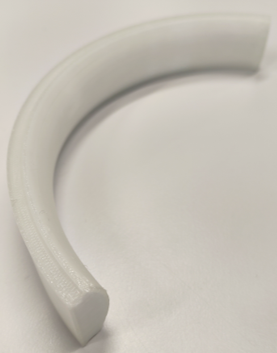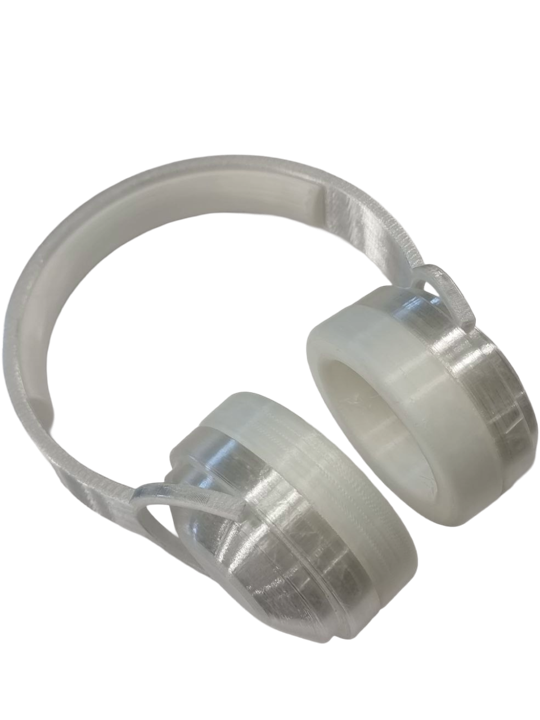
Headband arc — circular headphone prototype
Design for Manufacturing - Singapore University of Technology and Design 2025
CIRCULAR
HEADPHONES
Singapore University of Technology & Design 3D Modeling & Printing Design for Manufacturing & Assembly Sustainability
01
Overview

Project Brief

Headphone headband padding degrades and peels over time. Yet, unlike earpads, it is rarely replaceable. This forces users to discard fully functional headphones, contributing to 15 million kg of electronic waste annually. We analysed popular headphones on the market to see why this padding is hard to replace, and redesigned the headband to allow for easy replacability of the padding. We also took design for manufacturing and assembly into account.
Design Process

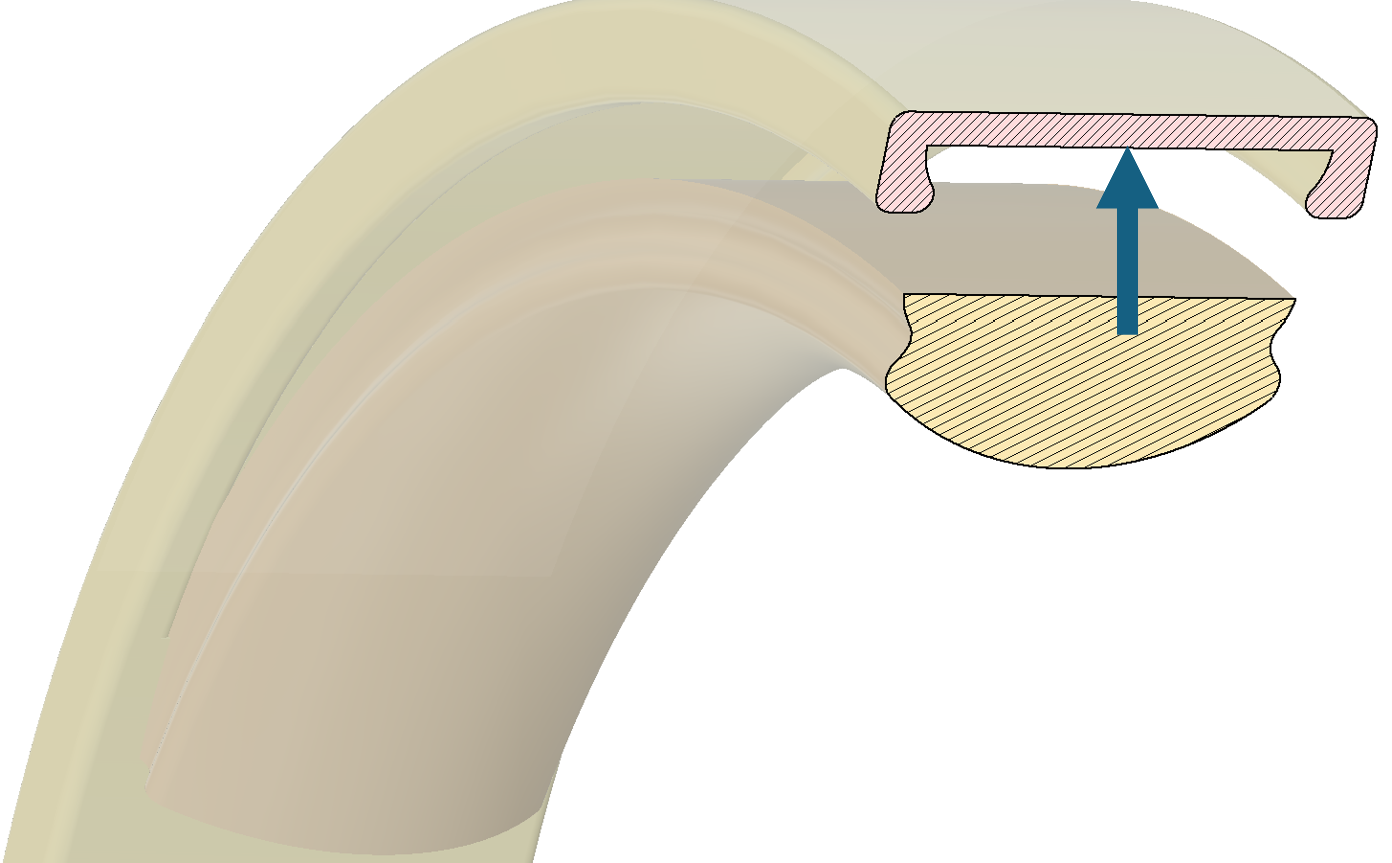
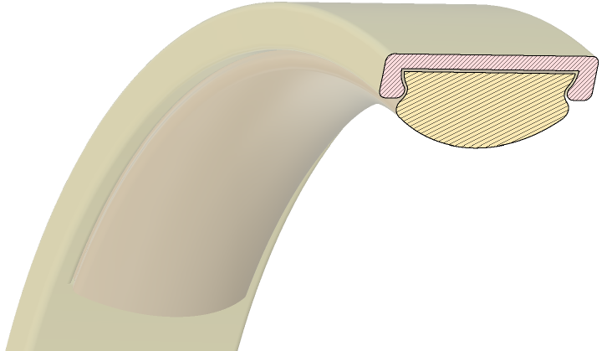
CAD cutaway diagram of the headband arc showing the snap-on cross-section: PETG frame channel (pink) receiving the TPU 85A cushion (yellow) with a blue upward assembly arrow
Mechanism

Snap-on Mechanism

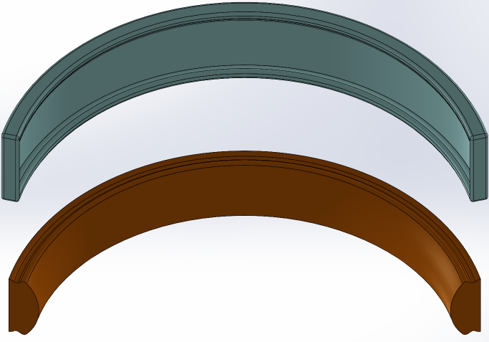
The solution uses a snap-on mechanism. The padding is easily guided into the slot on the headband, and clicks into place with two-hand pressure, requiring no tools and no disassembly of any other component. The cushion is printed using TPU 85A for softness and flexibility while the headband frame is printed with PETG for structural integrity. For large scale production, injection molding would be used. Both parts are made from just one material, making manufacturing and assembly easy.
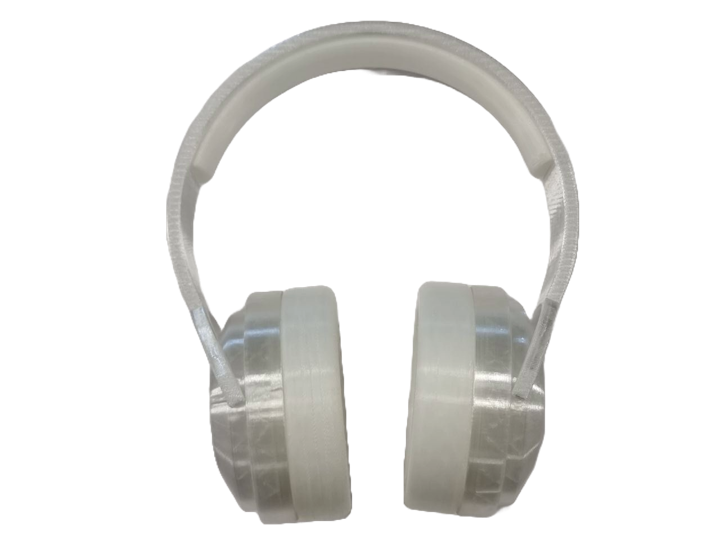
Front view of the full 3D-printed headphone prototype — white PETG headband arc with TPU 85A cushion installed and both earmuffs attached
snap-on mechanism

Detailed View of Mechanism

Early prototypes explored a slide-in rail mechanism, but the earmuffs obstructed alignment along the rail, making assembly impractical. Switching to a snap-on approach resolved this by allowing the cushion to press on from above without any guiding rails. Three joining methods (velcro, adhesive, and external clips) were evaluated before the snap-on mechanism was selected as the most secure, durable, and hair-safe option.
Full Prototype

03
Engineering

Design Highlights

Tool-less (Dis)assembly in Under 10 Seconds The snap-on padding attaches and detaches by pressing with both hands. no tools or disassembly of any other component needed.
Long Lifespan Stretch and assembly testing confirmed the TPU 85A cushion withstands repeated flexing and snap cycles without deforming or losing retention force.
Only 2 Materials Used Only PETG for the frame and TPU 85A for the padding was used. This makes manufacturing and assembly easier, reduces manufacturing cost, and improves recyclabilty.
Scalable Manufacturing Small scale: FDM 3D printing with PLA and TPU filaments. Large scale: injection moulding with two-shot moulding for the rigid-soft headband cushion.
04
Analysis

Critique & Limitations

CAD cross-section diagram showing the snap-fit cushion profile locked inside the PETG frame channel Cross-section — Snap Profile Engaged in Frame

The prototype validated the snap mechanism and material choices, but three areas would require further development before a production-ready product could be delivered.
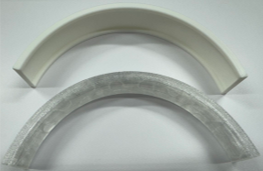
FDM-printing Surface Finish Limits Comfort The TPU cushion was FDM-printed, giving a layered texture that differs from an injection-moulded finish. Real comfort testing requires a production-quality mould.
Wired Headband Routing Excluded The project focused on padding replaceability of dual bluetooth connected headphones. Headphones routing a cable through the headband arc were excluded and would need an additional design step.
User Testing Limited to Mechanical Cycling Testing covered snap durability and stretch cycles but did not include extended wear trials across diverse head sizes, hair types, or real-world usage scenarios.